
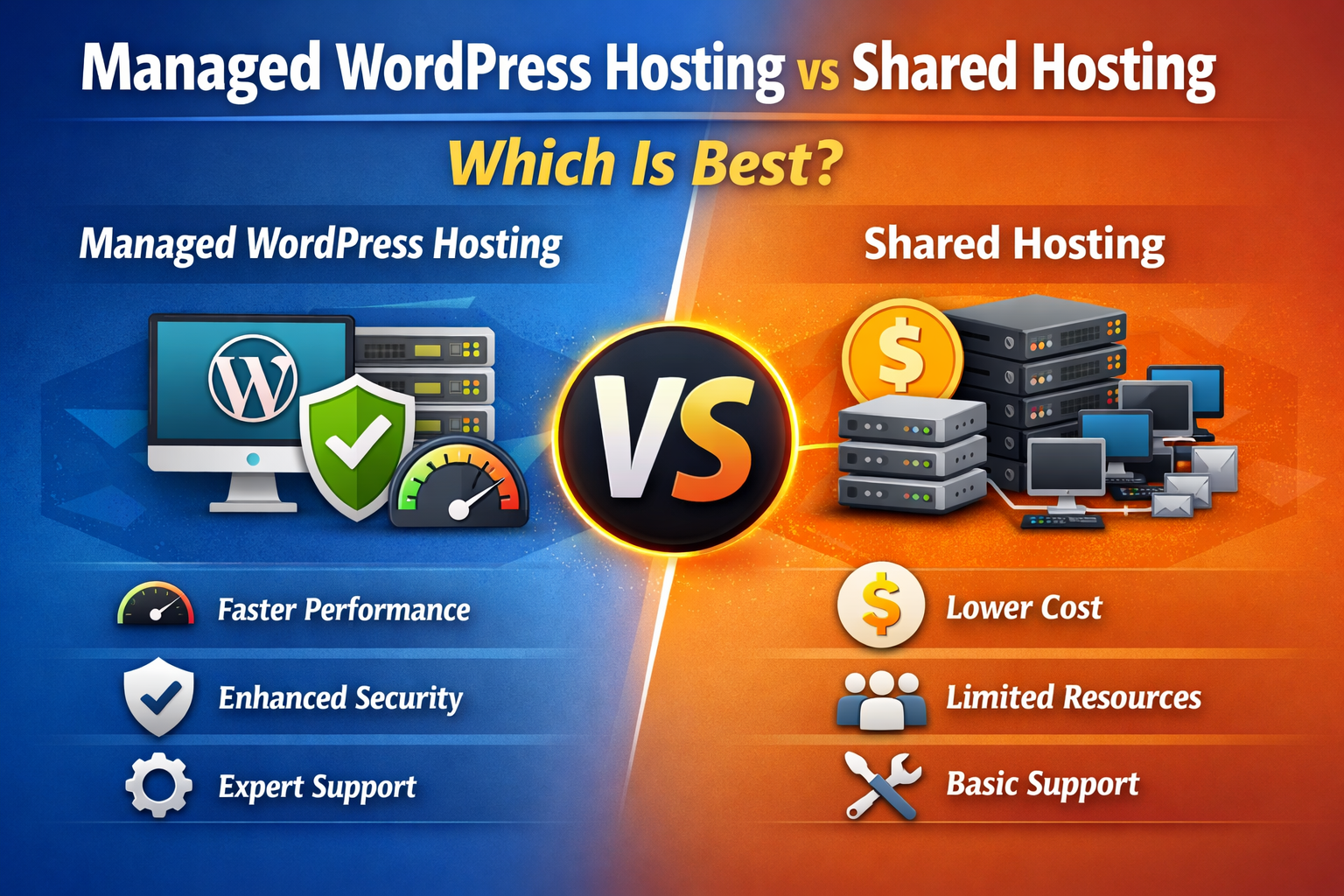
Choosing a hosting service can be a very tricky choice to make. Even some business professionals don’t know the difference between Managed WordPress Hosting and Shared Hosting. While both services are popular, they are very different and serve different purposes.
In this guide, we will simplify the difference between managed WordPress hosting and shared hosting. By the end, you should have a good idea of which is better for you.
What is Shared Hosting?
Shared hosting is the simplest and least expensive type of hosting available.
This type of hosting allows multiple websites to use the same resources for their server like CPU, RAM, and storage. Because many websites are hosted one server, they share the costs which greatly reduces the price
Key Features of Shared Hosting
- Low cost (around $2–$15 per month)
- Easy to start for beginners
- Supports multiple platforms, not just WordPress
- Basic security and support
- You manage updates, backups, and optimization yourself
Shared hosting is good for:
- Personal blogs
- Portfolio websites
- Small websites with low traffic
However, since resources are shared, performance may slow down if other websites on the server use more resources.
What is Managed WordPress Hosting?
Managed WordPress hosting is a special hosting service designed only for WordPress websites.
Here, the hosting company handles all the technical work for you, including:
- WordPress updates
- Daily backups
- Security monitoring
- Speed optimization
- Performance tuning
Managed hosting usually runs on optimized infrastructure that keeps your website fast and stable.
Key Features of Managed WordPress Hosting
- Automatic updates (core, themes, plugins)
- Advanced security and malware protection
- Daily backups
- Built-in caching and CDN
- Expert WordPress support
- Better uptime and reliability
It typically costs more (around $10–$45+ per month), but you get a complete hands-off experience.
Managed WordPress Hosting vs Shared Hosting: Key Differences
Let’s compare both options based on important factors.
#1. Performance and Speed
Shared Hosting
- Resources are shared with many websites
- Performance may drop during high traffic
- Manual optimisation needed
Managed WordPress Hosting
- Servers optimized specifically for WordPress
- Built-in caching and CDN
- Faster loading (often 30–50% improvement)
- Handles traffic spikes easily
If website speed matters for SEO or user experience, managed hosting is the better option.
#2. Security
Security is a major difference between the two.
Shared Hosting
- Basic security
- Higher risk because many sites share the same environment
- You must manage security plugins and updates
Managed WordPress Hosting
- Advanced firewalls and malware scanning
- Automatic security updates
- Isolated environments to reduce cross-site risks
For business websites or eCommerce stores, managed hosting provides much stronger protection.
#3. Maintenance and Updates
Shared Hosting
- You are responsible for:
- WordPress updates
- Plugin updates
- Backups
- Performance optimization
Managed WordPress Hosting
- Everything is handled automatically
- One-click restore from backups
- Continuous monitoring
Managed hosting saves time and reduces technical stress.
#4. Cost Comparison
| Hosting Type | Price Range |
| Shared Hosting | $12–$15/month |
| Managed WordPress | $10–$250+/month |
Shared hosting is cheaper, but managed hosting includes performance, security, and support in the package.
Think of it like this:
- Shared hosting = budget option
- Managed hosting = premium service
#5. Support Quality
Shared Hosting
- General technical support
- Not always WordPress experts
Managed WordPress Hosting
- WordPress specialists
- Faster problem resolution
- 24/7 priority support
If your website is important for business, expert support can save a lot of time.
#6. Scalability
Shared Hosting
- Limited scalability
- May require migration when traffic grows
Managed WordPress Hosting
- Easy scaling
- Can handle sudden traffic increases
- Suitable for growing businesses
#7. Uptime and Reliability
Managed hosting providers usually offer 99.9% or higher uptime, ensuring your site stays online most of the time. Shared hosting may face downtime if server resources are overloaded.
Pros and Cons
Shared Hosting – Pros
- Very affordable
- Beginner-friendly
- Supports multiple platforms
Shared Hosting – Cons
- Slower speed
- Limited resources
- Manual maintenance
- Basic security
Managed WordPress Hosting – Pros
- Faster performance
- Strong security
- Automatic updates and backups
- Expert support
- High reliability
Managed WordPress Hosting – Cons
- Higher cost
- WordPress-only environment
- Some plugin restrictions
Which Hosting is Best for You?
Choose Shared Hosting if:
- You are starting a new blog
- Your website has low traffic
- You have a limited budget
- You don’t mind managing updates yourself
Choose Managed WordPress Hosting if:
- Your website is for business
- You run an eCommerce store
- You expect high traffic
- You want better speed and security
- You prefer a hands-off experience
Many businesses eventually move from shared hosting to managed hosting as their website grows.
Does Hosting Matter?
Yes, hosting directly affects SEO.
Google considers:
- Page speed
- Website uptime
- Security (HTTPS)
- User experience
Managed WordPress hosting usually performs better in all these areas, which can improve your search rankings.
Slow or frequently down websites can lose traffic and rankings over time.
Final Verdict: Managed WordPress vs Shared Hosting
There is no one-size-fits-all answer.
- Shared Hosting is best for beginners, hobby sites, and small blogs.
- Managed WordPress Hosting is best for serious websites, businesses, and growing brands.
If your website is important for your income or brand, investing in managed WordPress hosting is worth it. But if you are just starting and want to keep costs low, shared hosting is a good beginning.
Conclusion
How to choose between managed WordPress hosting and shared hosting will depend on what you would like to achieve, how much you would like to budget, and what level of technical knowledge you possess. While shared hosting involves much less complexity, managed WordPress hosting provides more speed, security, and a simpler user experience.
Begin with what will adequately meet your demands at the current moment, but always select a hosting solution that will leave you room for expansion and the potential to accommodate your future needs
FAQs:
Q1. Does managed WordPress hosting justify the cost?
Yes, managed WordPress hosting justifies the cost if your website is a critical part of your business, or it is anticipated to draw significant traffic. Managed hosting is less of a headache because it provides a greater level of speed, security, and support, as well as automatic updates and daily backups. It will offer better performance, and for those that want a carefree experience, it will be a less expensive option.
Q2. Can I start with shared hosting and upgrade later?
Definitely. Start with shared hosting as a lot of website owners and website developers do because it is the cheapest option. Managed WordPress hosting is always available, and you will be able to upgrade to it and gain more dependability and performance as your website grows, or as your traffic becomes more significant.
Q3. Are beginners better off with shared hosting or managed WordPress hosting?
For someone just starting a small blog or personal website, shared hosting offers more value. But, if you prefer leaving techy stuff like updates, backups, and security to someone else, managed WordPress hosting becomes more beginner-friendly.
Q4. Does hosting affect website speed and SEO?
Yes, hosting plays a big role in website speed, uptime, and overall performance. Faster websites provide a better user experience and can improve your SEO rankings. Managed WordPress hosting usually offers better speed and stability compared to shared hosting.
Read Also: Why Mylt34 Is the Best Automation Upgrade in 2026
Read Also: What Is Pabington? A Complete Guide for Businesses




Leave a Reply